

An EVD drain, or external ventricular drain, is one of the most critical devices in neuroscience nursing. It is placed by a neurosurgeon inside the brain's fluid spaces. Itsjob is to drain excess cerebrospinal fluid (CSF) and relieve pressure in the brain.
Nurses who manage EVD drains carry enormous responsibility. A small mistake can lead to life-threatening complications. On the other hand, careful and consistent nursing care can be lifesaving.Nurses who manage EVD drains carry enormous responsibility. A small mistake can lead to life-threatening complications. On the other hand, careful and consistent nursing care can be lifesaving.
This guide breaks down exactly what you need to know. It is written for nurses who work with EVD patients in any clinical setting. For additional clinical resources, visit the AANN neuroscience resources page.
What Is an EVD Drain and Why Is It Used?
The brain is surrounded by a fluid called cerebrospinal fluid, or CSF. Normally, this fluid flows freely and drains on its own. However, certain conditions block or slow that drainage. This causes pressure to build up inside the skull.
An EVD drain helps relieve that pressure. It uses a thin tube inserted into the brain's ventricles. The tube connects to a collection system outside the body. As pressure rises above a set level, CSF flows out through the drain.
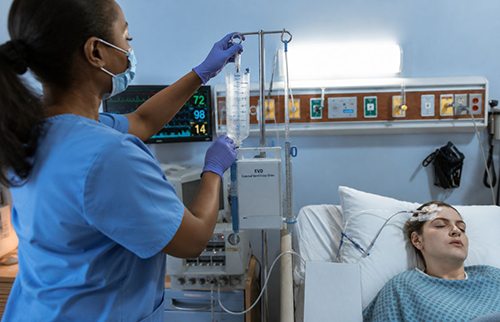
Common conditions that require an EVD drain include traumatic brain injury, bleeding around the brain (subarachnoid hemorrhage), and hydrocephalus. All of these involve dangerous levels of pressure in the skull.Common conditions that require an EVD drain include traumatic brain injury, bleeding around the brain (subarachnoid hemorrhage), and hydrocephalus. All of these involve dangerous levels of pressure in the skull.
Key EVD Drain Nursing Responsibilities
Managing an EVD drain involves several critical nursing tasks. Each one must be done correctly and consistently. Here is what nurses need to focus on:
- Level the EVD Drain at Every Shift - Always re-level the drain at the start of every shift and whenever the patient is repositioned. The drain should align with the foramen of Monro near the ear, as even small height changes can cause CSF to drain too fast or too slow, leading to serious complications or pressure buildup.
- Watch CSF Color and Amount - Check CSF hourly and document the amount drained. Normal CSF should be clear like water; if it appears cloudy, pink, or bloody, notify the doctor immediately, as this may indicate infection or bleeding. Both excessive and insufficient drainage can be dangerous.
- Keep the System Sterile -Because an EVD drain goes directly into the brain, strict sterile technique is essential. Never touch connection points without sterile gloves or flush the drain unless ordered by a doctor. Check the insertion site dailyfor redness, swelling, or discharge, and change the dressing using sterile technique according to hospital protocol.
- Read the ICP Waveform - When the EVD is also monitoring intracranial pressure (ICP), watch the waveform on the monitor. A healthy waveform has three peaks. When the middle peak rises higher than the first, that is a warning sign. It may mean the brain is losing its ability to manage pressure changes. Report this change to the care team right away.
- Clamp Before Transport - Always clamp the EVD drain before moving the patient. Forgetting this step is one of the most common and dangerous EVD errors. Use a checklist or ask a second nurse to verify before and after every transport. Once the patient is settled in the new position, unclamp the drain and re-level immediately.
Common EVD Drain Problems and What to Do
Even with great nursing care, EVD drains can have problems. Here is how to troubleshoot the most common ones:
- No drainage: Check that the drain is unclamped. Confirm the drain level isNo drainage: Check that the drain is unclamped. Confirm the drain level iscorrect. Look for kinks in the tubing. If drainage is still absent, call theneurosurgery team.
- Too much drainage: Verify the drain is set at the right level. If output isunusually high, notify the physician. Over drainage can cause a dangerous drop in brain pressure.
- Bloody CSF: Note the time and appearance. Document carefully. Do not flushthe drain. Contact the doctor immediately.
- Air in the tubing: Check all connections. Make sure they are tight. If a large air bubble is present, call the team before taking any action.
Building Your EVD Drain Skills With AANN
Managing an EVD drain well takes both knowledge and practice. The Core Curriculum for Neuroscience Nursing and the Evidence-Based Clinical Review: Intracranial Monitoring are some of the best resources available. It gives nurses a deep clinical foundation in neuroscience nursing, including intracranial pressure management.
AANN also offers continuing education through its Annual Conference and online courses. These help nurses stay current with the latest evidence. Additionally, AANN membership connects you with a community of more than 5,200 neuroscience nurses.
Ready to Advance Your Neuroscience NursingReady to Advance Your Neuroscience Nursing Career?
EVD drain nursing is one of the most demanding skills in the specialty. It requires focus, clinical judgment, and a commitment to excellence. AANN supports nurses who take that commitment seriously. Become a member today and access the tools you need to deliver the best care possible.
Categories: Education | Professional Development | Neurotrauma