-
Home

-
Quick Links
-
Blog
- Read More
Educating Patients on the Warning Signs of a Mini Stroke
A transient ischemic attack (TIA), commonly called a mini stroke, is one of the most urgent warning signs the brain can send. Mini stroke symptoms may resolve within minutes, but their significance should never be minimized. For neuroscience nurses, teaching patients to recognize and act on these symptoms is one of the most impactful things they can do to prevent a full stroke.
What Patients Need to Understand About Mini Stroke Symptoms
At least 240,000 individuals experience a TIA each year in the United States, and the 90-day stroke risk following one can be as high as 17.8%, with nearly half of those strokes occurring within just two days. Despite these numbers, many patients still walk away from a TIA without seeking care. Research shows that many patients lack a basic understanding of their diagnosis and their stroke risk, with some dismissing subsequent symptoms entirely because they resolved quickly. The term "mini stroke" itself contributes to this misunderstanding, leading patients to believe the event was minor or inconsequential.
This is where neuroscience nurses make a measurable difference. Nurses are often the primary point of contact for patient education, and they are uniquely positioned to correct misconceptions, explain risk in plain language, and reinforce the urgency of seeking care even after mini stroke symptoms have resolved. Patients need one clear, consistent message: a TIA is a medical emergency, and calling 911 immediately, regardless of whether symptoms have already passed, is always the right response.
Teaching the Warning Signs of a Mini Stroke

The B.E.F.A.S.T. acronym gives patients a memorable tool for identifying mini stroke symptoms. Nurses should walk through each component clearly:
Balance problems: Is the person having trouble with coordination or balance? Are they feeling dizzy or stumbling when they walk?
Eyesight issues: Is the person experiencing blurry, blackened, or double vision in one or both eyes?
Face drooping: Is one side of the face drooping or numb? Ask the patient to smile and observe whether one side of the mouth sags.
Arm weakness: Is one arm weak or numb? Ask the patient to raise both arms at the same time and watch for one drifting or sagging downward.
Speech difficulty: Is speech slurred or hard to understand? Ask the patient to repeat a simple phrase and listen for anything unusual.
Terrible headache: Does the person have a severe headache that came on suddenly, within seconds? Would they describe it as the worst headache they have ever had?
Nurses should emphasize that stroke symptoms in women can be more subtle and are more easily missed or dismissed. In addition to the standard B.E.F.A.S.T. criteria, women may also experience general weakness or fatigue, nausea, disorientation, or memory issues. Including this in patient education ensures that no presentation goes unrecognized or minimized.
Making Mini Stroke Education Stick
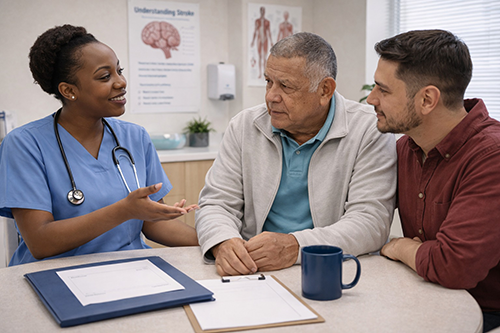
Delivering the information is only part of the job. Neuroscience nurses must also confirm that patients actually retain it. A few strategies that improve recall:
Teach-back: Ask patients to explain the warning signs of a mini stroke in their own words before discharge. If a patient cannot accurately describe the symptoms, that is a signal to revisit the information before they leave.
Include caregivers: Involving a family member or caregiver in the education session improves the likelihood of a fast response. When more people in a patient’s immediate circle can recognize mini stroke symptoms, emergency care can be initiated sooner.
Provide written materials: A simple take-home sheet listing mini stroke symptoms and emergency instructions gives patients something to reference and share later. This matters most when symptoms appear under stress, when recall drops.
Time education strategically: Patients are often overwhelmed at diagnosis. Reinforce education during follow-up visits or quieter moments in care, rather than relying on a single conversation.
Health literacy and language barriers should guide how information is delivered. Visual aids and plain language work better than clinical terminology for many patients, and for older adults, repetition across multiple interactions improves retention. The goal is not just for patients to hear the information once, but to leave ready to recognize a mini stroke and act without hesitation.
The Nurse's Role in Mini Stroke Prevention
Neuroscience nurses bring both clinical expertise and patient-centered communication to TIA education. Their role is not just to inform, but to motivate action. When a patient understands that mini stroke symptoms are a warning the brain will not always repeat, they are far more likely to respond quickly when it matters most.
Nurses looking to strengthen their stroke care knowledge can explore AANN's Comprehensive Review for Stroke Nursing and expand their stroke education in focused sessions in the Stroke track at the AANN Annual Conference.
Ready to connect with a community that supports excellence in neuroscience nursing? Join AANN today.
Differentiating Psychogenic Seizures from Epileptic Events
When a patient experiences a seizure-like episode, clinicians face an immediate and critical question: is this a neurological event or a psychological one? Psychogenic seizures, also known as psychogenic nonepileptic seizures (PNES), closely mimic epileptic seizures in appearance but arise from psychological rather than abnormal electrical brain activity.
For neuroscience nurses, understanding this distinction directly shapes patient care, medication decisions, and long-term outcomes.
Understanding Psychogenic Seizures
Psychogenic seizures are episodes that resemble epileptic seizures but occur without the abnormal electrical discharges seen in epilepsy. They fall under the category of functional neurological disorders, meaning the brain's function is disrupted without detectable structural or electrical abnormality. PNES often connects to psychological stress, trauma, anxiety, or mood disorders, and it disproportionately affects women and individuals with a history of adverse life experiences.
Importantly, psychogenic seizures are not fabricated. Patients do not consciously produce these episodes, and the distress they experience is genuine. Mischaracterizing PNES as intentional behavior undermines trust, delays appropriate treatment, and worsens outcomes.
Clinical Features That Differentiate Psychogenic Seizures from Epilepsy
Clinical observation remains a cornerstone of differentiation, as psychogenic seizures can look remarkably similar to epileptic events. Several features, when present together, can raise suspicion for PNES rather than epilepsy.
Movement Patterns
Movement in psychogenic seizures often appears asynchronous. Patients may exhibit side-to-side head movements, pelvic thrusting, or irregular limb thrashing that lacks the rhythmic, synchronized quality of tonic-clonic epileptic seizures. PNES episodes also tend to last longer, sometimes several minutes, whereas most generalized tonic-clonic seizures resolve within 90 seconds.
Ictal Behavior
Patients experiencing psychogenic seizures frequently maintain some degree of awareness. They may respond to voice during an event or resist eye opening when clinicians attempt to examine them. Epileptic seizures, by contrast, typically produce complete unresponsiveness without purposeful or emotionally reactive movements.
Postictal Recovery
Postictal recovery differs meaningfully between the two conditions. After a generalized epileptic seizure, patients typically experience confusion, fatigue, and disorientation lasting minutes to hours. After a psychogenic seizure, patients recover quickly and remain neurologically alert, though they may show emotional distress.
The Gold Standard: Video-EEG Monitoring
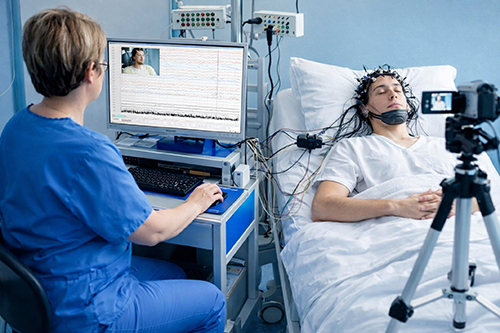
Clinical features provide useful guidance, but they are not enough for a definitive diagnosis. Video-EEG monitoring is the gold standard for differentiating psychogenic seizures from epileptic events, capturing movements and brain electrical activity simultaneously. Neuroscience nurses support this process by documenting key details during each episode:
Seizure onset and any identifiable triggers
Movement patterns, including type, rhythm, and progression
Duration of the episode from start to finish
Responsiveness during the event, such as reaction to voice or touch
Postictal behavior, including recovery time and neurological status
A normal EEG during a clinical seizure strongly supports a PNES diagnosis. Nurses who recognize early signs of an event and initiate monitoring protocols can make the difference between capturing a diagnostic episode or missing it entirely.
Communicating the Psychogenic Seizures Diagnosis
Delivering a PNES diagnosis requires sensitivity and precision. Patients often feel dismissed when told their seizures are "not real," especially after years of treatment for epilepsy. Neuroscience nurses can reinforce several key points to support this conversation:
Psychogenic seizures are a recognized medical condition, not a sign of weakness or deception
The brain is genuinely involved, even without abnormal electrical activity
Cognitive behavioral therapy (CBT) is currently the most evidence-supported treatment for PNES
Antiepileptic drugs are ineffective for psychogenic seizures and may introduce unnecessary side effects
Early and accurate diagnosis prevents prolonged inappropriate treatment and opens the door to meaningful recovery

ow the diagnosis is framed can significantly influence whether a patient engages with treatment or withdraws from care altogether. Nurses who approach this conversation with empathy and clear, jargon-free language help patients move from confusion and frustration toward acceptance and action. That kind of therapeutic communication is a skill as clinically valuable as any technical competency in neuroscience nursing.
The Nurse's Role in Ongoing Care
Managing patients with psychogenic seizures requires an interdisciplinary approach involving neurology, psychiatry, and psychology. Neuroscience nurses serve as a consistent point of contact across these specialties, coordinating care, educating patients and families, and monitoring treatment response over time.
Nurses in epilepsy monitoring units, outpatient neurology clinics, and inpatient settings are often the first to notice patterns that distinguish psychogenic seizures from epileptic events. That clinical vigilance, grounded in strong neuroscience nursing education, protects patients from misdiagnosis and steers them toward the care they truly need.
To deepen your expertise in seizure management and comprehensive epilepsy care, explore AANN's Epilepsy Certificate Program and learn how membership can support your professional growth at AANN.
Comprehensive Spine Education: Building Foundational Knowledge for the Spine Healthcare Professional
Nurses across neuro ICUs, surgical units, rehabilitation centers, and outpatient clinics manage patients with spinal cord injuries, post surgical recovery, chronic pain, and progressive neurological decline. The clinical exposure is constant, but the training is not. For many nurses, spine knowledge develops through repeated encounters rather than structured education. That uneven foundation shows up at the bedside, where delayed recognition, unclear escalation, and inconsistent assessments can directly affect outcomes.
Why a Strong Foundation Matters in Spine Education
The spine is not an isolated system; it interfaces with neurological, musculoskeletal, and vascular function simultaneously. A patient presenting with new lower extremity weakness after lumbar surgery, for example, requires a nurse who can differentiate between expected post-operative findings and early signs of spinal cord compromise. That kind of clinical judgment does not come from general nursing training alone. It comes from targeted spine education.
Understanding spinal anatomy, pathophysiology, and neurological assessment is what enables nurses to catch subtle changes in patient status early. Key competency areas in spine education include:
Neurological assessment — motor strength grading, sensory testing, and reflex evaluation
Surgical procedures — laminectomy, discectomy, and spinal fusion, including associated complications and post-operative monitoring
Rehabilitation principles — supporting functional recovery and coordinating multidisciplinary care
Patient education — helping patients understand diagnoses, set realistic expectations, and manage their recovery long-term
Foundational spine education also shapes how nurses communicate within the care team. A nurse who understands the difference between central and foraminal stenosis, or who can accurately describe a change in a patient's ASIA Impairment Scale score, brings a level of clinical precision that directly affects the speed and quality of provider response. In spine care, where neurological changes can be time-sensitive, that precision matters.
Closing the Gap Between Practice and Specialty
Many nurses who regularly care for spine patients do not see themselves as spine specialists. A rehabilitation nurse may manage post-surgical fusion cases every day but still identify primarily with rehab. The issue is not the title. It is what that identity signals about access to focused spine education and a structured way to build expertise.

Each year, about 18,421 new traumatic spinal cord injury cases occur in the United States, not including the much larger population living with degenerative spine conditions, stenosis, or disc disease. These patients appear across every care setting. Without a clear framework for spine assessment and management, important neurological changes can be missed or misattributed. Structured spine education closes that gap by giving nurses a shared clinical language, clearer escalation cues, and the confidence to act when it matters most.
Who Should Pursue Spine Education?
Spine education is relevant across a wide range of practice settings and roles. This program is built for nurses and advanced practice providers who work with spine patients in any clinical environment. That includes:
Neurosurgical and orthopedic floor nurses
Nurses in rehabilitation and post-acute care settings
Advanced practice providers managing spine patients in specialty or primary care
Nurses in general medical-surgical or critical care units who encounter spinal cord injuries or post-operative spine patients
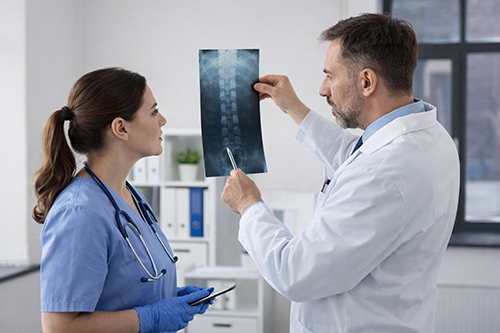
Whether you are new to spine care or looking to validate years of hands-on experience, the spine certificate programoffers a structured, professionally recognized way to formalize your knowledge and advance your practice.
The AANN Spine Healthcare Professional Certificate Program
The American Association of Neuroscience Nurses and the American Board of Neuroscience Nursing jointly developed three certificate programs focused on advancing specialized expertise in neuroscience care. These assessment-based programs use structured, online self-study courses followed by post-assessments to validate clinical knowledge and support evidence-based practice. Each program is designed to strengthen patient care across the continuum, from acute management to long-term treatment and coordination. Nurses who complete these programs earn CE contact hours along with an ABNN certificate of added qualification, recognizing their advanced knowledge and clinical competence.
Research supports the value of AANN's specialty education model. A study published in the Journal of Neuroscience Nursing on AANN's seizure and epilepsy certificate program found that nurses who completed it reported meaningful improvements in both clinical knowledge and confidence. The spine certificate program follows the same evidence-based design framework, and earning a certificate also signals professional commitment, which matters in an environment where nurses are asked to do more with fewer resources.
Ready to grow as a neuroscience nursing professional? Join or renew your AANN membership and access the education, community, and resources that support your development.
Mastering Stroke Care: Why Stroke Certification for Nurses Elevates Patient Safety
Every May, Stroke Awareness Month highlights the nurses who respond to stroke with speed, precision, and clinical judgment. For stroke and neuroscience nurses, the stakes are immediate and measurable, as outcomes often depend on minutes and decisions made under pressure. Clinical excellence directly affects survival and recovery. Pursuing stroke certification for nurses is a concrete way to strengthen that expertise and deliver better care for the patients who depend on you.
What Stroke Certification for Nurses (SCRN®) Validates
Stroke remains one of the leading causes of death and long-term disability in the United States, with about 795,000 cases each year. Roughly 610,000 are first-time strokes, and nearly 1 in 4 survivors will experience another. For nurses on the front lines, that reality carries enormous clinical responsibility. Recognizing early warning signs, managing thrombolytic therapy, monitoring for neurological decline, and guiding families through crisis all demand specialized knowledge that goes far beyond general nursing training.
The Stroke Certified Registered Nurse (SCRN®) credential, offered by the American Board of Neuroscience Nursing, formally recognizes a nurse’s expertise in stroke care. It reflects a rigorous, standardized benchmark that spans prevention, acute treatment, rehabilitation, and patient education. For experienced stroke nurses, it turns years of hands-on practice into a credential that is recognized nationwide.
Beyond individual achievement, stroke certification for nurses carries weight across the entire care environment. Employers, accreditation bodies, and interdisciplinary teams recognize the SCRN® as a marker of specialized expertise. As a result, certified nurses are better positioned to advocate for patients, shape unit protocols, and drive meaningful quality improvement.
How Stroke Certification for Nurses Improves Patient Outcomes

Research consistently links certified nurses to better patient outcomes. In stroke care, where treatment windows are measured in minutes, that relationship is especially critical. Stroke certification for nurses translates directly to sharper, safer practice at the bedside.
1. Identifying Subtle Neurological Changes Early
Certified nurses detect signs of deterioration, including shifts in consciousness, speech, motor function, and cranial nerve response, that are easy to miss without a specialized knowledge base. Early detection gives the care team more time to intervene and improves recovery outcomes.
2. Executing Time-Sensitive Interventions With Confidence
Certified stroke nurses understand the protocols, contraindications, and monitoring requirements behind tPA administration and mechanical thrombectomy. That knowledge makes critical interventions safer and more effective.
3. Preventing Complications Before They Develop
Stroke patients face elevated risk for aspiration pneumonia, deep vein thrombosis, pressure injuries, and falls. Specialized stroke knowledge allows nurses to apply prevention strategies proactively, reducing secondary complications in already medically complex patients.
4. Delivering Education That Actually Sticks
Stroke often arrives without warning, leaving patients and families underprepared. Certified nurses explain diagnoses clearly, set realistic recovery expectations, and teach risk-reduction strategies that help patients take ownership of their long-term health.
5. Communicating Effectively Across the Care Team
Stroke care involves physicians, therapists, pharmacists, and case managers. Certified nurses bring a shared clinical vocabulary to those interactions, strengthening the handoffs and collaborative decisions that directly affect patient safety.
6. Strengthening Unit-Wide Standards
Nurses with SCRN® certification stay current on clinical guidelines and emerging research. Consequently, they become a go-to resource for colleagues, raising the collective competency of the entire care team.
7. Building Professional Credibility Beyond the Bedside
The SCRN® gives nurses a stronger platform for advocating for patients and influencing care policies. Overall, stroke certification for nurses reinforces value that extends well beyond any single unit.
When certification becomes a shared expectation, the care environment improves broadly. Communication sharpens, protocols are applied more consistently, and patients benefit from a team whose expertise has been formally validated.
Take the Next Step This Stroke Awareness Month
Stroke Awareness Month is a practical moment to evaluate where you are in your nursing career and where you want to go. Pursuing stroke certification for nurses is a logical next step: a way to formalize years of clinical experience, fill knowledge gaps, and show up more fully for the patients in their care.

Strong exam preparation starts with the right study materials. AANN's Comprehensive Review for Stroke Nursing and the Core Curriculum for Neuroscience Nursing offer the clinical depth the SCRN® exam requires, covering stroke pathophysiology, acute nursing management, rehabilitation, and secondary prevention in detail.
Ready to earn your SCRN®? Explore stroke certification preparation resources at AANN.
Take your neuroscience nursing career further. Join AANN and access the resources, community, and education your specialty demands.
Categories: Stroke | Professional Development | Education
The Value of Specialization: Why CNRN Certification Is Indispensable for Career Growth
Healthcare continues to change rapidly. As a result, neurological patient care is becoming more complex. Nurses who support patients with stroke, epilepsy, traumatic brain injury, spinal disorders, and other neurological conditions must make informed decisions every day. Because of this reality, CNRN certification has become increasingly important in neuroscience nursing.
CNRN certification offers a clear path toward professional growth, and AANN’s neuroscience resources provide education tailored to evolving clinical needs. In addition, national workforce data continues to show steady demand for registered nurses. According to the U.S. Bureau of Labor Statistics, employment of registered nurses is projected to grow over the next decade, reinforcing the value of advanced credentials in competitive healthcare environments.
As healthcare systems evolve, nurses who pursue specialty credentials demonstrate initiative. In addition, they position themselves for long-term career advancement and expanded responsibility through opportunities such as professional development workshops and peer networking.
What CNRN Certification Means for Neuroscience Practice
CNRN Certification validates specialized expertise in neuroscience nursing. In other words, it confirms that a nurse has met recognized standards in caring for patients with neurological conditions.
Neuroscience patients often require:
Detailed and accurate assessments
Rapid recognition of neurological changes
Strong clinical judgment
Coordinated communication across care teams
Because neurological conditions can shift quickly, nurses must respond with confidence. For this reason, preparation for CNRN certification strengthens both knowledge and clinical decision-making.
In addition, earning this specialty credential shows professional accountability. It signals a commitment to maintaining high standards of care. As a result, certification becomes more than a milestone. It becomes part of a nurse’s professional identity.
How Specialty Certification Builds Professional Credibility
Professional credibility develops through experience. However, this specialty certification can accelerate that growth in a measurable way.
When nurses achieve CNRN certification, they demonstrate:
Advanced understanding of neuroscience nursing principles
Commitment to evidence-informed practice
Dedication to continued professional development
Readiness to manage complex neurological cases
Because of this, certified nurses often gain increased trust within interdisciplinary teams. At the same time, colleagues recognize specialty credentials as markers of expertise and reliability.

Moreover, certification strengthens internal confidence. Many nurses report feeling more prepared after completing the certification process. Consequently, that preparation improves communication, clinical judgment, and patient education.
Furthermore, specialization supports leadership potential. Nurses who invest in professional growth are often considered for expanded responsibilities. Therefore, certification can serve as a strong foundation for advancement into educator, mentor, or clinical leadership roles.
Career Advantages of Earning CNRN Certification
Specialty certification can influence career progression, and AANN’s Career Development resources help nurses identify opportunities and professional pathways aligned with their goals.
Professional Recognition
Certification distinguishes nurses who have demonstrated advanced knowledge in their field. As a result, they are often viewed as clinical resources within their organizations.
Leadership Opportunities
Certified nurses frequently take on roles such as preceptor, educator, or team leader. In many cases, certification strengthens visibility and credibility when leadership positions become available.
Expanded Career Options
As neuroscience services grow across healthcare systems, specialized expertise becomes increasingly valuable. Because of this demand, certification supports transitions into advanced neuroscience settings, quality improvement initiatives, and program development roles.
Greater Professional Confidence
Preparation for certification reinforces clinical foundations. Therefore, nurses often feel more secure in high-pressure situations and more effective when educating patients and families.
Long-Term Career Stability
Healthcare environments continue to shift. However, specialized credentials help nurses remain competitive and adaptable. For this reason, certification supports sustained relevance in a changing workforce.

In many healthcare environments, nurses face staffing pressures and limited professional development funding. Even so, pursuing certification remains a proactive way to invest in future growth and professional resilience.
Preparing for Certification and Continued Growth
Preparation is a critical part of the certification journey. Therefore, structured study materials and continuing education programs play an important role
Effective preparation often includes:
Reviewing core neuroscience concepts
Participating in targeted educational sessions
Connecting with peers who share similar goals
Applying updated knowledge directly to practice
As nurses prepare for CNRN Certification, resources like the CNRN Study Session: Recorded Review & Prep, the Core Curriculum book, and the CNRN Self-Assessment Exam can support focused study and exam readiness. This deepens understanding while strengthening clinical practice.
In addition, engaging in focused education strengthens connection to the neuroscience nursing community. Shared learning fosters collaboration and collective commitment to improving patient outcomes.
Specialization as a Strategic Career Decision
Neuroscience nursing demands precision, adaptability, and continuous learning. Because patient needs are complex, advanced expertise improves both performance and confidence.
CNRN certification validates specialized expertise in neuroscience nursing. In other words, it confirms that a nurse has met recognized standards in caring for patients with neurological conditions.
Ultimately, career growth requires intention. For nurses considering their next professional step, specialization provides clarity. Certification strengthens credibility, expands opportunity, and reinforces commitment to high-quality patient care.
In a competitive and evolving healthcare landscape, investing in advanced credentials is a strategic choice. In addition, this credential supports professional identity, long-term advancement, and meaningful contribution to neuroscience nursing practice.
Take the Next Step in Your Neuroscience Nursing Career
Ready to advance your expertise in neuroscience nursing? Explore AANN’s CNRN preparation resources to begin your certification journey, access continuing education opportunities, and connect with a community dedicated to excellence in neurological care.
Visit AANN’s CNRN Prep page to learn more and start planning your next professional milestone.
Categories: Certification | Professional Development | Education
Enhancing Patient Care: The Impact of the Seizure and Epilepsy Certificate Program
An epilepsy certificate program through the AANN/ABNN Seizure and Epilepsy Certificate Program strengthens clinical competency and supports improved patient outcomes. As expectations in neurological care continue to evolve, structured education remains essential for maintaining high standards of practice.
For neuroscience nurses, the epilepsy certificate program provides focused, evidence-informed learning that supports both competency and professional growth. More importantly, it reinforces a shared commitment to excellence in epilepsy and seizure management.
Why an Epilepsy Certificate Program Matters in Clinical Practice
Seizure disorders present complex and often unpredictable clinical challenges. Therefore, nurses must be equipped with current knowledge and practical skills to respond effectively. This certificate program supports this need by offering structured education aligned with contemporary standards.
In addition, certificate programs provide consistency. When nurses complete the epilepsy certificate program, they demonstrate a commitment to validated knowledge in seizure care. As a result, teams benefit from improved communication, stronger clinical decision-making, and greater confidence in patient management.
Research published in the Journal of Neuroscience Nursing found that nurses who completed the program reported greater clinical confidence and improved knowledge use in practice. These results demonstrate how an epilepsy certificate program supports safe and informed patient care.
Strengthening Clinical Competency Through Structured Education
The AANN/ABNN Seizure and Epilepsy Certificate Program is designed to provide targeted education that directly supports bedside practice. Because seizure care spans acute, critical, and rehabilitation environments, nurses require adaptable and practical knowledge.
Epilepsy certificate programs address key areas such as:
Recognition and assessment of seizure activity
Monitoring and safety considerations
Patient and family education
Interdisciplinary coordination
These competencies are essential for delivering safe and effective care.

Furthermore, epilepsy certificate programs promote ongoing professional development. Nurses who complete the program gain greater clarity in clinical reasoning and improved confidence when managing complex neurological cases.
Impact on Patient Outcomes and Quality of Care
Through this certificate program, nurses develop structured knowledge that supports consistent and informed patient care.
Epilepsy certificate programs contribute to:
Increased consistency in seizure care practices
Improved documentation accuracy
Enhanced patient education and engagement
Strengthened interdisciplinary collaboration
As a result, patients benefit from informed, coordinated, and responsive care.
In addition, standardized training helps align teams around best practices. This alignment supports quality improvement efforts across neurological units and outpatient settings.
Supporting Consistency Across Care Settings
Epilepsy care often extends across multiple departments, including emergency care, inpatient neurology units, rehabilitation settings, and outpatient clinics. Because patients may transition between these environments, consistency in clinical knowledge is essential.
The epilepsy certificate program helps standardize understanding across care teams. When nurses share a common educational foundation, communication improves and clinical decisions become more aligned. As a result, patients experience more coordinated and predictable care.
In addition, structured education reduces variability in practice. Clear guidance and reinforced knowledge help ensure that seizure recognition, documentation, and patient education remain consistent across settings.
For organizations focused on quality improvement, this certificate program supports initiatives that strengthen neurological care standards.
Professional Recognition and Career Growth
Beyond clinical impact, an epilepsy certificate program reflects professional dedication. Nurses who pursue a certificate program demonstrate initiative and commitment to advancing their expertise.

Because healthcare systems increasingly value specialized knowledge, a certificate program can enhance professional visibility. It signals preparedness to contribute meaningfully to epilepsy-focused initiatives within an organization.
For nurses seeking continued engagement within the neuroscience community, AANN Membership provides additional resources and networking opportunities
What Are the Benefits of the Epilepsy Certificate Program?
Focused education in seizure and epilepsy care
Evidence-informed curriculum
Strengthened clinical confidence
Support for improved patient outcomes
Recognition of specialized knowledge
Who Should Consider the Epilepsy Certificate Program?
The epilepsy certificate program is valuable for nurses working in:
Acute care settings
Epilepsy monitoring units
Neurocritical care environments
Rehabilitation facilities
Outpatient neurology clinics
In addition, nurses who care for patients with seizure disorders in broader medical units may benefit from structured epilepsy education. The Seizure and Epilepsy Certificate Program offers accessible learning tailored to practical application.
Advancing Excellence in Epilepsy Care
The Seizure and Epilepsy Certificate Program reflects AANN’s commitment to advancing neuroscience health through education and engagement. By pursuing the epilepsy certificate program, nurses strengthen their clinical expertise while contributing to improved patient care standards.
As healthcare continues to evolve, specialized education remains essential. The epilepsy certificate program provides a structured pathway for nurses to enhance competency, support quality outcomes, and advance professional growth.
Long-Term Professional Development
Beyond immediate clinical application, this certificate program supports long-term professional growth. Nurses who pursue specialty education demonstrate initiative and commitment to advancing their expertise.
Over time, a certificate program may open opportunities for leadership roles, educational responsibilities, and participation in program development. In addition, it strengthens credibility when collaborating with interdisciplinary teams.
By investing in the epilepsy certificate program, nurses position themselves as knowledgeable advocates within their organizations and communities.
Learn More About the Epilepsy Certificate Program
Ready to review more details about the AANN/ABNN Seizure and Epilepsy Certificate Program? Visit the official certificate programs page to review details and enrollment information.
Details
Description Epilepsy Certification through the AANN Seizure and Epilepsy Certificate Program strengthens clinical competency, supports patient outcomes, and advances professional recognition in neurological care.
Categories: Epilepsy | Professional Development | Education
Recognition and Celebration: Planning for Neuroscience Nurses Week 2026
Neuroscience Nurses Week is a chance to step back from the day-to-day pace and recognize the people on your team who keep neurological care moving forward. From May 10 to 16, you have a dedicated window to highlight the skill, resilience, and impact of the nurses your staff and patients rely on every day. These are the people managing complex cases, supporting families through difficult moments, and showing up with a level of expertise that deserves more than a quick thank you.
Planning ahead makes all the difference between something rushed and something that actually feels meaningful. Instead of pulling ideas together at the last minute, early planning gives you the space to create a celebration that reflects your team and the work they do.
Why Neuroscience Nurses Week Matters More Than Ever
Neuroscience Nurses Week gives you a clear moment to recognize the people your team depends on every day. Your nurses handle complex care, make fast decisions, and face constant pressure without much pause. Recognition during the week shows their work is seen and valued.
You already know how much your team carries, but they do not always hear it directly. A dedicated week makes appreciation visible instead of implied. A shift like that can change how people feel about their role.
Recognition also has a direct impact on retention and engagement. Nurses who feel valued are more likely to stay committed and invested in their work. A focused effort during the week reinforces that message in a way daily routines cannot. Consistent recognition shows intention, not just a one-off thank you.
Team culture also grows stronger when people feel seen and supported. Taking time to celebrate together builds connection across roles and shifts, as well as building potential mentorship opportunities. A shared experience like that carries forward long after the week ends.
7 Simple Ways to Recognize Your Neuroscience Nursing Team
Recognition during Neuroscience Nurses Week does not need to be complicated to be effective. Your team responds best to efforts that feel genuine and connected to the work they do every day. A thoughtful approach will always land better than something rushed or overly generic.

Here are seven simple ways to recognize your team during the week.
- Personal Thank You Notes
A handwritten note from leadership can go a long way in making someone feel seen. Keep it specific by calling out something the nurse handled well or contributed to recently. That level of detail makes the recognition feel real instead of routine. - Peer-to-Peer Recognition
Create space for nurses to recognize each other in a visible way. A shared board, quick huddle mentions, or digital shoutouts can encourage participation across the team. Peer recognition often carries extra weight because it comes from people who understand the work firsthand. - Daily Spotlights
Highlight one or two team members each day during the week. Share a short story, a win, or a contribution that reflects their impact. Spreading recognition across multiple days keeps engagement steady and inclusive. - Upskilling and Certification Seminars
Offer access to upskilling opportunities or host short certification-focused sessions during the week. Bringing in speakers or sharing guidance on specialty certifications shows investment in professional growth. Recognition tied to development feels meaningful because it supports long-term career goals. - Courses and Webinars
Provide access to relevant courses and webinars that nurses can explore at their own pace. Curated learning options help your team stay current while reinforcing that their growth matters. Flexible formats make it easier for more staff to participate. - Small, Thoughtful Perks
Offer simple perks during Neuroscience Nurses Week, like snacks, coffee, or small giveaways during shifts. Focus on convenience and accessibility so everyone has a chance to participate. Practical gestures show you are thinking about your team’s day, not just the occasion. - Team Recognition Moments
Set aside a few minutes during shift changes or meetings to recognize group efforts. Call out wins that required collaboration and highlight how the team supported each other. Shared recognition builds a stronger sense of connection across roles.
Turning One Week of Recognition into Lasting Impact
A strong Neuroscience Nurses Week should not feel like a one-time effort. The goal is to use the week as a starting point for more consistent recognition moving forward. What you do during the week can set the tone for the rest of the year.

Follow-through is what turns a good idea into lasting impact. Carrying recognition into regular team meetings or monthly highlights keeps that momentum going. Leadership visibility also plays a key role in sustaining that impact. When leaders continue to acknowledge contributions beyond the week, it reinforces trust and respect across the team.
Building simple habits around recognition makes it easier to maintain, creating positive leadership opportunities for many team members. Regular check-ins, peer recognition, and small celebrations keep appreciation part of your culture. Lasting impact comes from making recognition part of how your team operates every day. When appreciation becomes consistent, it stops feeling like an event and starts feeling like a standard.
Celebrate Your Team and Stay Connected Year-Round
Neuroscience Nurses Week gives you a clear opportunity to recognize your team in a way that feels intentional and well deserved. The effort you put in during this week can shape how your staff feels about their work and their place on the team. Strong recognition builds momentum that carries into everyday interactions and long-term engagement.
Lasting impact comes from staying connected and continuing that sense of recognition beyond a single week. The American Association of Neuroscience Nurses supports you with resources, ideas, and a community of professionals who understand your work. Visit our website to connect with other neuroscience nurses and keep that momentum going all year long.
Categories: Membership | Professional Development | Leadership
Innovation in Dallas: Previewing Top Clinical Tracks at the AANN Neuroscience Nursing Annual Conference
Published on March 20, 2026

The AANN Neuroscience Nursing Annual Conference will take place March 21–24 in Dallas, Texas. This annual event brings together neuroscience nurses for focused education, collaboration, and professional growth. As healthcare continues to evolve, continuing education remains essential for maintaining excellence in neurological care.
Designed for professionals across care settings, this Annual Conference creates space for clinical insight, leadership development, and peer connection. For nurses committed to advancing neurological care, the event represents more than a meeting. It offers a structured opportunity for growth.
Why the AANN Neuroscience Nursing Annual Conference Matters
The landscape of neuroscience nursing continues to expand. Advances in diagnostics and interdisciplinary care require ongoing professional development. Therefore, structured education remains critical.
According to the U.S. Bureau of Labor Statistics, employment of registered nurses is projected to grow steadily over the next decade. As a result, specialized clinical expertise is becoming increasingly important in complex care environments.
The Annual Conference responds directly to these realities. Attendees can expect discussions centered on evolving standards, patient safety strategies, and leadership within neuroscience practice.
Clinical Education Designed for Today’s Challenges
The strength of any neuroscience conference lies in its educational depth. The 2026 Annual Conference will reflect high-impact areas central to neurological practice.
Educational content often explores topics such as:
Stroke care and rapid neurological assessment
Epilepsy and seizure management strategies
Neurocritical care considerations
Rehabilitation and recovery support
Interdisciplinary communication in complex care
These focus areas support improved neurological outcomes across care settings.

In addition, the Annual Conference emphasizes practical application. Sessions are designed to translate evidence into action. As a result, attendees leave with strategies that can be implemented immediately.
For continued learning beyond the event, explore AANN’s Neuroscience Resources page.
Innovation and Professional Networking
Beyond clinical sessions, the Annual Conference encourages collaboration. Conferences serve as environments where ideas evolve and leaders connect.
Attendees can:
Engage with neuroscience nursing experts
Share quality improvement strategies
Explore innovative care approaches
Build long-term professional relationships
Because healthcare delivery continues to shift, networking strengthens adaptability. Furthermore, these professional relationships often extend beyond the event itself.
For career advancement support, visit AANN’s Career Development resources.
A Community Committed to Neuroscience Excellence
One defining feature of the Annual Conference is community. When professionals gather with shared purpose, collective learning accelerates.
Through collaboration and structured dialogue, attendees strengthen both expertise and confidence. In addition, participation reinforces professional identity within neuroscience nursing.
To remain connected year-round, explore AANN membership opportunities.
Additionally, full conference details and updates are available through the official Annual Educational Conference page.
Who Should Attend the Annual Conference?
The AANN Neuroscience Nursing Annual Conference is designed for nurses across the continuum of neurological care. Because neuroscience practice spans multiple clinical environments, this event welcomes diverse roles and specialties.
Attendees may include:
Students
Stroke nurses and coordinators
Epilepsy specialists
Neurocritical care professionals
Rehabilitation nurses
Advanced practice providers
Clinical educators and nurse leaders
In addition, nurses who regularly care for patients with neurological conditions in broader units will find relevant and practical value. The Annual Conference provides focused education regardless of primary department designation.
By bringing together professionals from varied settings, the 2026 event fosters shared innovation and strengthened standards of care.
Key Benefits of Attending the 2026 Neuroscience Conference
Evidence-informed clinical education
Leadership development opportunities
Interdisciplinary networking
Exposure to evolving neuroscience standards
Community engagement within AANN
What Attendees Can Expect in Dallas
In addition to structured sessions and networking opportunities, the Annual Conference offers a focused environment for professional reflection. Conferences provide space to step away from daily clinical demands and evaluate emerging trends in neurological care.
Attendees can expect balanced programming that supports both early-career nurses and experienced leaders. Educational discussions often encourage practical problem solving, interdisciplinary dialogue, and strategic thinking around patient outcomes. As a result, participants leave with renewed clarity and professional motivation.
Furthermore, hosting the Annual Conference in Dallas allows for convenient travel access and a centralized gathering point for neuroscience professionals from across the country. Bringing together diverse perspectives strengthens collaboration and reinforces shared standards of excellence.
For many attendees, this event becomes a defining moment in their annual professional development journey.
Plan Your Visit to Dallas in 2026
The 2026 event offers a structured opportunity to advance clinical knowledge and strengthen leadership capacity.
Dallas provides a vibrant setting for collaboration. As a result, the event supports both formal education and informal professional dialogue.
For neuroscience nurses committed to innovation and excellence, attending this annual event is a meaningful investment in long-term growth.
2026 AANN Neuroscience Nursing Annual Conference Details
Location: Sheraton Dallas Hotel
Dates: March 21–24, 2026
Audience: Neuroscience nurses and healthcare professionals
Focus: Clinical education, leadership, networking
Ready to Learn More?
Visit the official 2026 Annual Conference page to explore event details, program updates, and registration information.